
Creating a comprehensive and easily digestible status report is crucial for project success. A well-structured report provides stakeholders with a clear overview of progress, challenges, and upcoming tasks, fostering transparency and accountability. A dedicated "One Page Project Status Report Template" is an invaluable tool for keeping everyone informed and aligned. This template streamlines the process, ensuring that key information is readily available without overwhelming stakeholders with lengthy documents. It's designed to be concise, actionable, and adaptable to various project types and sizes. The core principle is to present the most important data in a clear, visual format, maximizing its impact. This template is more than just a document; it's a communication strategy. It's about proactively sharing information, not just reacting to requests. Let's explore how to build a powerful one-page status report template that drives results.
Understanding the Importance of Status Reports
Before diving into the template itself, it's important to understand why these reports are so vital. They serve as a vital link between the project team and the wider organization. They allow stakeholders to track progress against goals, identify potential roadblocks early on, and make informed decisions. Without a consistent and accurate status report, communication breaks down, leading to delays, misaligned expectations, and ultimately, project failure. A proactive approach to status reporting demonstrates professionalism and a commitment to delivering successful outcomes. Furthermore, many organizations utilize these reports as a key performance indicator (KPI) to measure project health and identify areas for improvement. A well-maintained template is an investment in project success.
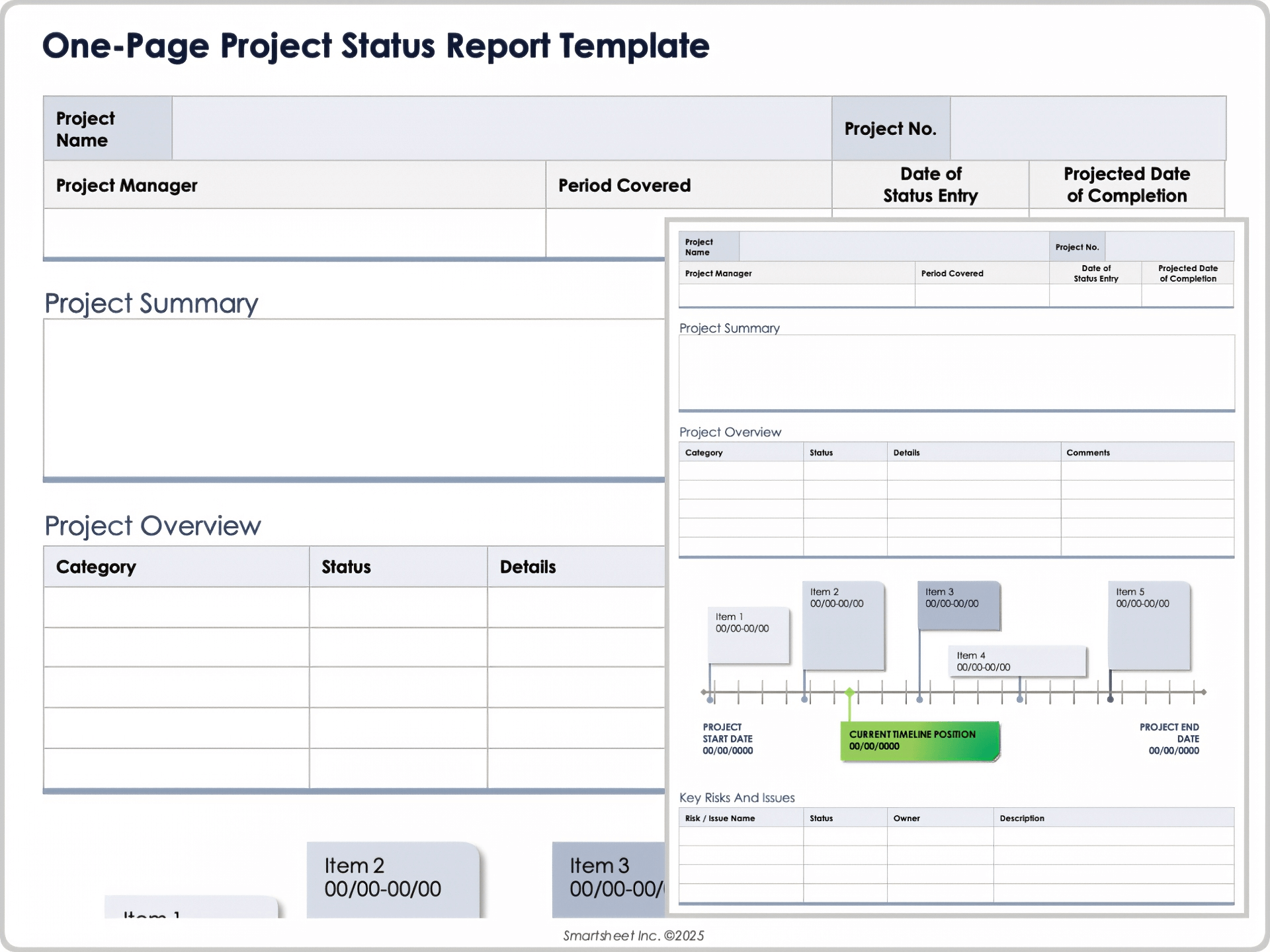
The Core Components of a One-Page Project Status Report
A truly effective one-page status report needs to be focused and to-the-point. It's not a detailed, exhaustive analysis; it's a snapshot of the current state. Here's a breakdown of the essential components:
- Project Overview: Briefly reiterate the project's goals and objectives. This reinforces the context for the report.
- Progress Summary: Quantify progress against key milestones. Use percentages, numbers, and specific data points to illustrate achievements.
- Task Status: Detail the status of each major task. Use a simple format like "Completed," "In Progress," or "Delayed."
- Risks & Issues: Identify any potential risks or issues that could impact the project. Briefly describe the risk, its potential impact, and proposed mitigation strategies.
- Upcoming Activities: Outline the key activities planned for the next reporting period.
- Budget Status: Provide a high-level overview of budget spend and any variances.
Section 1: Project Overview – Setting the Stage
This section provides a concise introduction to the project, its goals, and the team's overall approach. It's the foundation upon which all subsequent information is built. One Page Project Status Report Template begins with a clear statement of the project's purpose. For example: "Project Phoenix aims to develop a new mobile application for customer engagement, increasing customer satisfaction by 15% within six months." This foundational statement immediately establishes the project's importance and desired outcome. It's a brief, impactful summary that sets the tone for the entire report. It's crucial to avoid jargon and use language that everyone can understand.
Section 2: Progress Summary – Tracking Key Milestones
This section is the heart of the report, detailing the project's progress against established milestones. It's vital to use clear and concise language. Instead of simply stating "Work is progressing well," provide specific data. For instance: "Phase 1 (Requirements Gathering) is 75% complete, with all key requirements documented and approved. Task 'User Interface Design' is currently 50% complete, with initial mockups finalized." This section is where the "One Page Project Status Report Template" truly shines. It's a visual representation of how far the project has come. Consider using a simple chart or graph to illustrate progress. Don't overload the reader with too much detail; focus on the most important metrics.
Section 3: Task Status – Detailed Breakdown
This section provides a more granular view of task progress. It's helpful to categorize tasks by priority and status. Here are some examples:
- Completed: Tasks that have been successfully finished.
- In Progress: Tasks that are currently being worked on.
- Blocked: Tasks that are currently unable to proceed due to an obstacle. Clearly state the reason for the blockage.
- Deferred: Tasks that have been postponed and will be addressed in a future reporting period.
Important: For each task, include a brief description of the work completed, the estimated completion date, and the resources required. This allows stakeholders to quickly assess the workload and identify potential bottlenecks. Consider using a table format to present the task status.
Section 4: Risks & Issues – Proactive Problem Solving
This section identifies potential risks and issues that could impact the project. It's crucial to be proactive in addressing these issues before they escalate. For each risk, describe the potential impact, the likelihood of occurrence, and the proposed mitigation strategies. For example: "Risk: Key developer is unavailable due to illness. Impact: Delay in Phase 2 development. Mitigation: Cross-train another developer to cover the role." This is a critical element of a robust status report. Regularly reviewing and updating this section is essential. Documenting potential issues proactively demonstrates a commitment to minimizing disruption.
Section 5: Upcoming Activities – Next Steps
This section outlines the key activities planned for the next reporting period. It provides a clear roadmap for the team. For example: "Next Week: Finalize user testing results; Begin development of the payment gateway integration." This section helps stakeholders understand the project's direction and anticipate any potential challenges.
Section 6: Budget Status – Financial Overview
A brief overview of the project's budget. This section should include a summary of actual spending versus planned spending, highlighting any variances. It's important to be transparent about budget constraints and any necessary adjustments. For example: "Total budget allocated: $100,000. Expenditure to date: $75,000. Remaining budget: $25,000."
Conclusion – Key Takeaways
In conclusion, a well-structured and consistently maintained one-page project status report template is an indispensable tool for project success. By focusing on clear communication, quantifiable progress, and proactive risk management, teams can ensure that stakeholders are informed, engaged, and aligned with project goals. The key to a truly effective report is its brevity, clarity, and relevance. A template that is easily adaptable to different project types and audiences will yield the best results. Remember that the goal is not to present a lengthy analysis, but to provide a concise and actionable snapshot of the project's current state. Continuous improvement and refinement of the template are essential to maximize its effectiveness. Ultimately, a proactive and transparent status report empowers teams to make informed decisions and achieve project objectives.
Additional Resources
- [Link to a template example - hypothetical, for demonstration purposes]
- [Link to a blog post on effective project reporting]
- [Link to a guide on risk management in project management]
0 Response to "One Page Project Status Report Template"
Posting Komentar